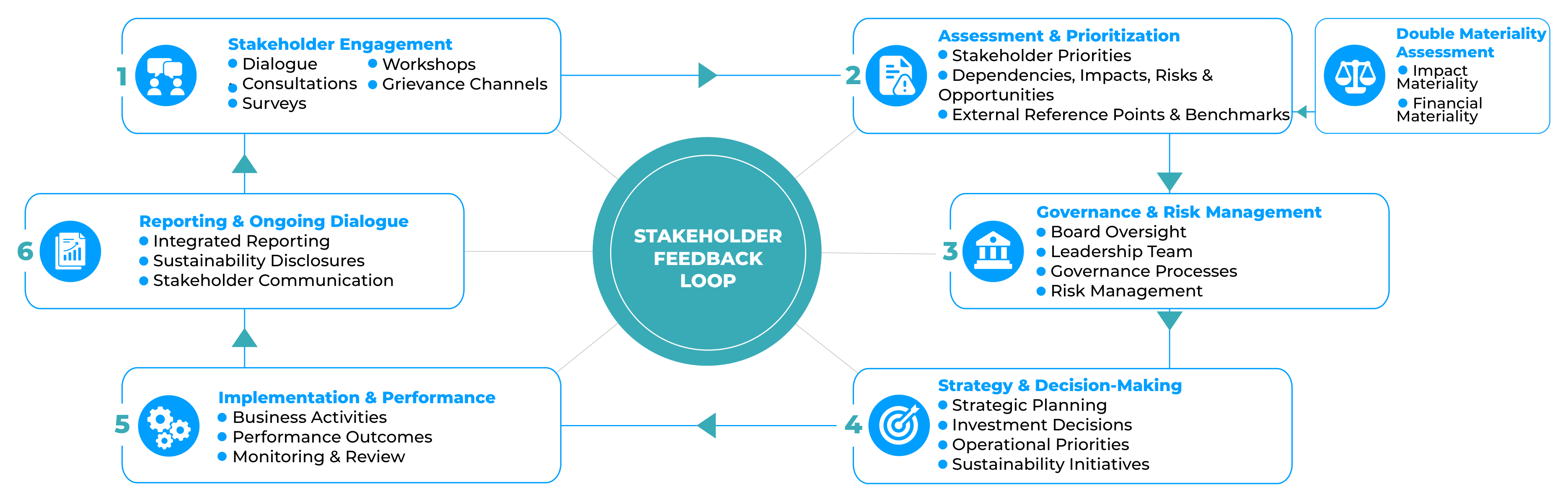
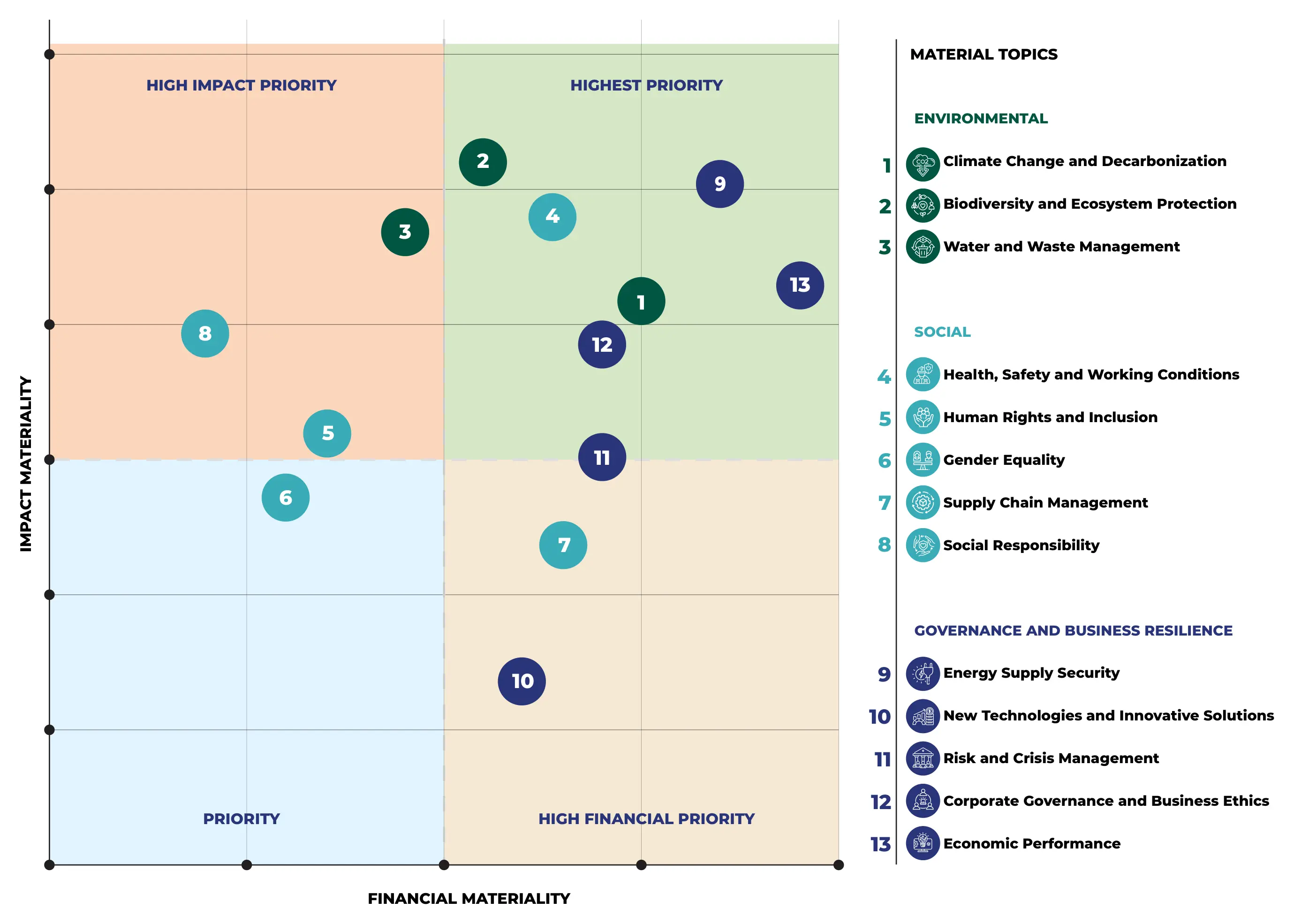
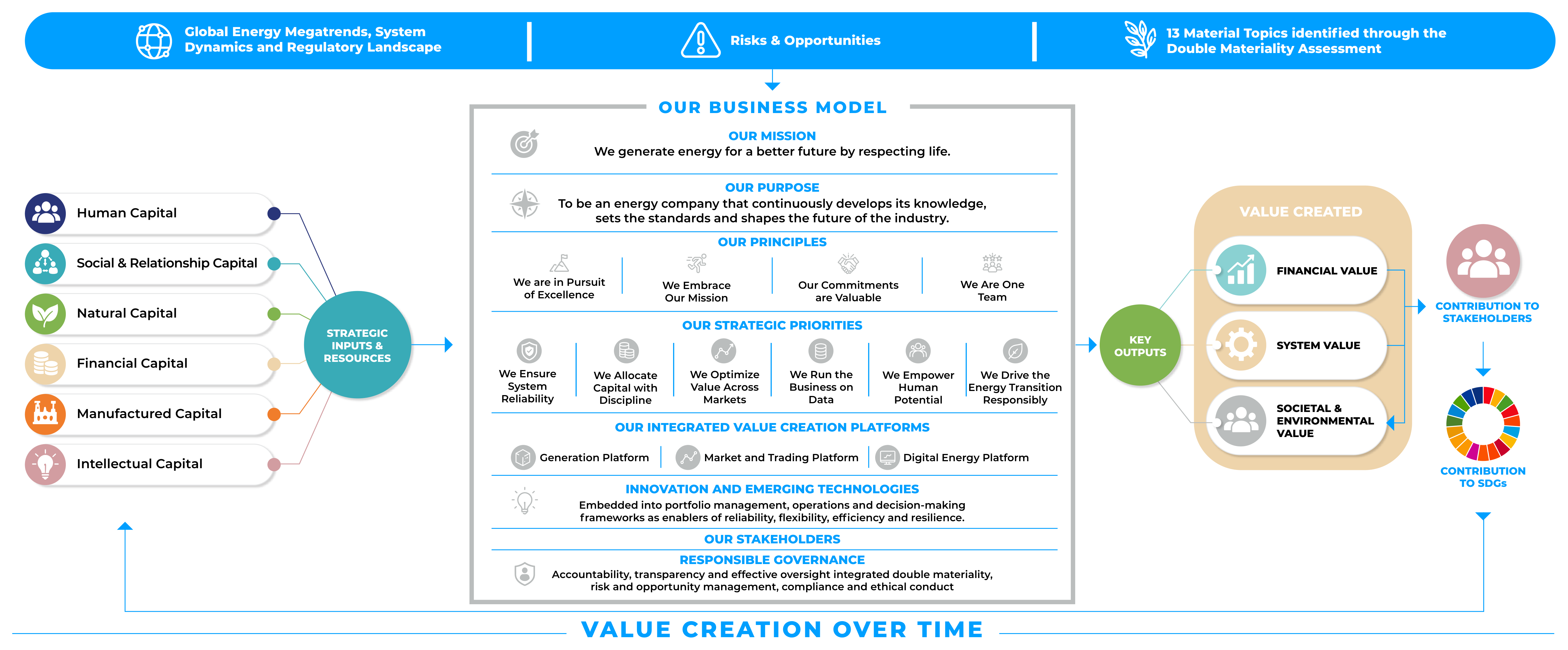
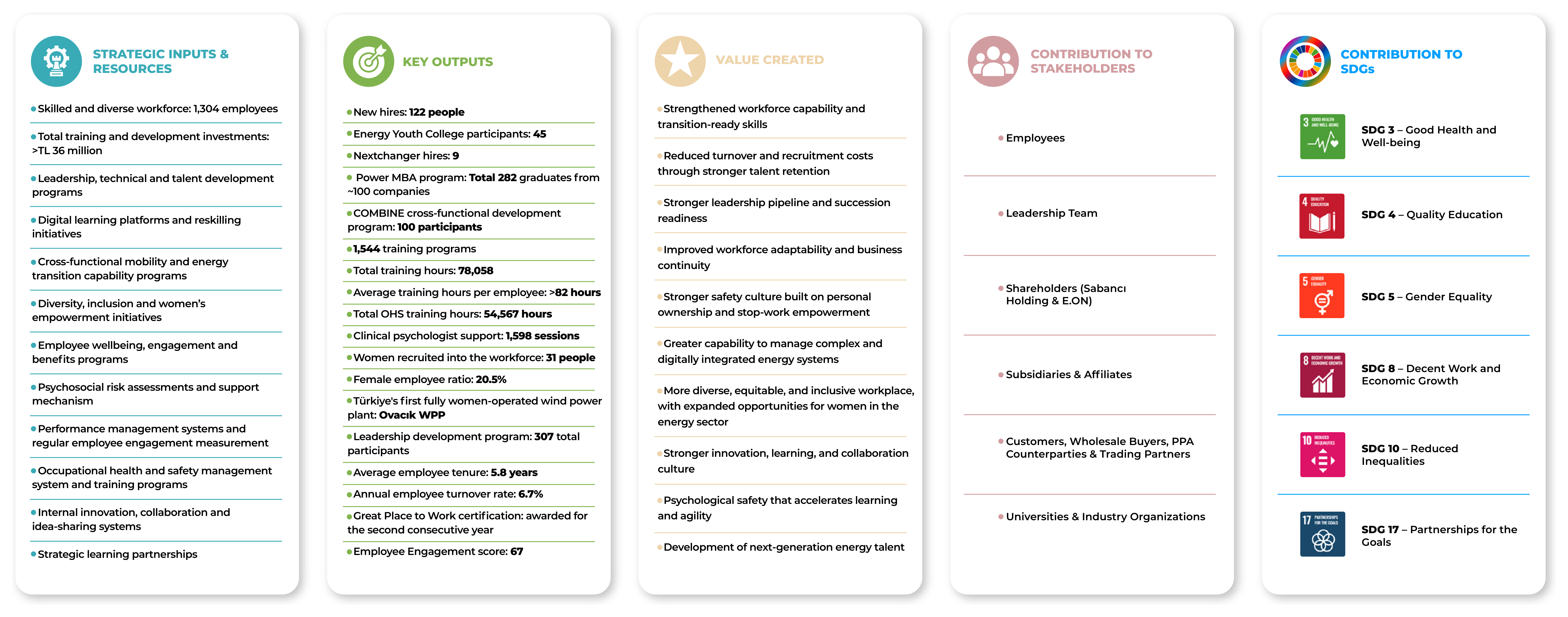
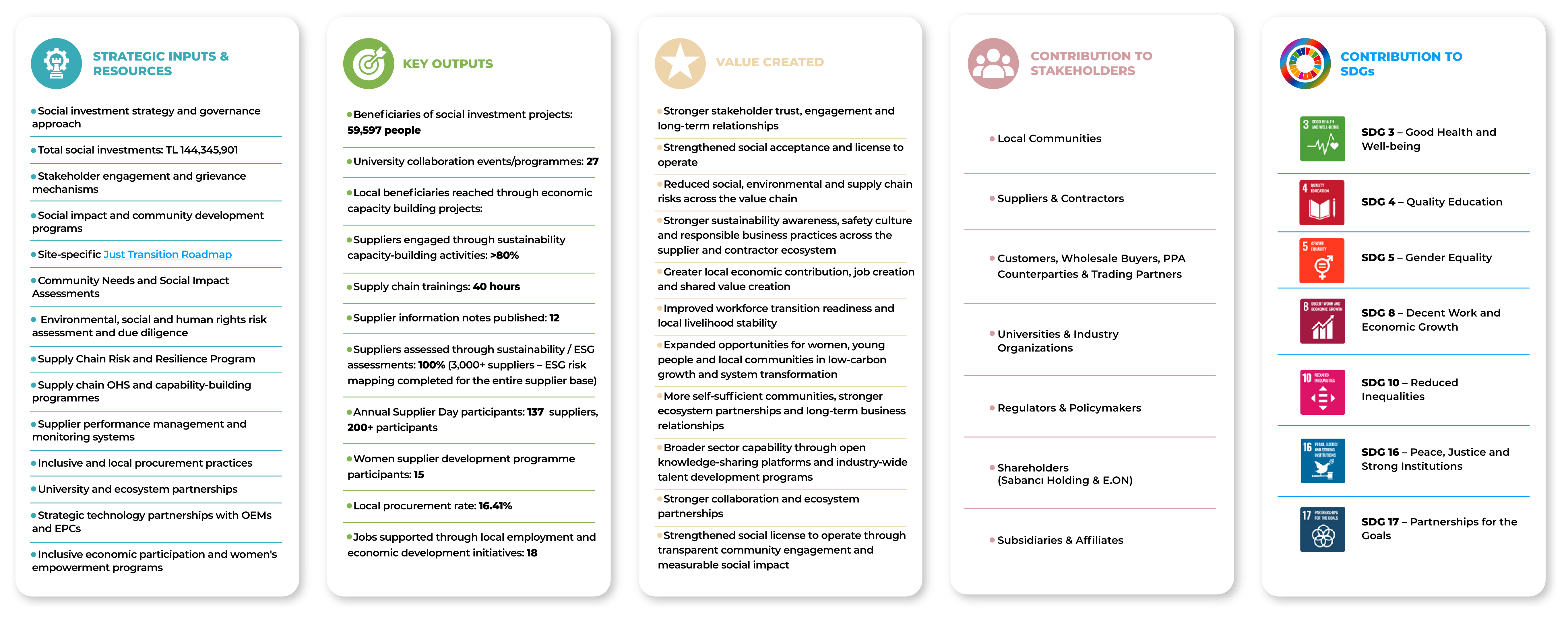
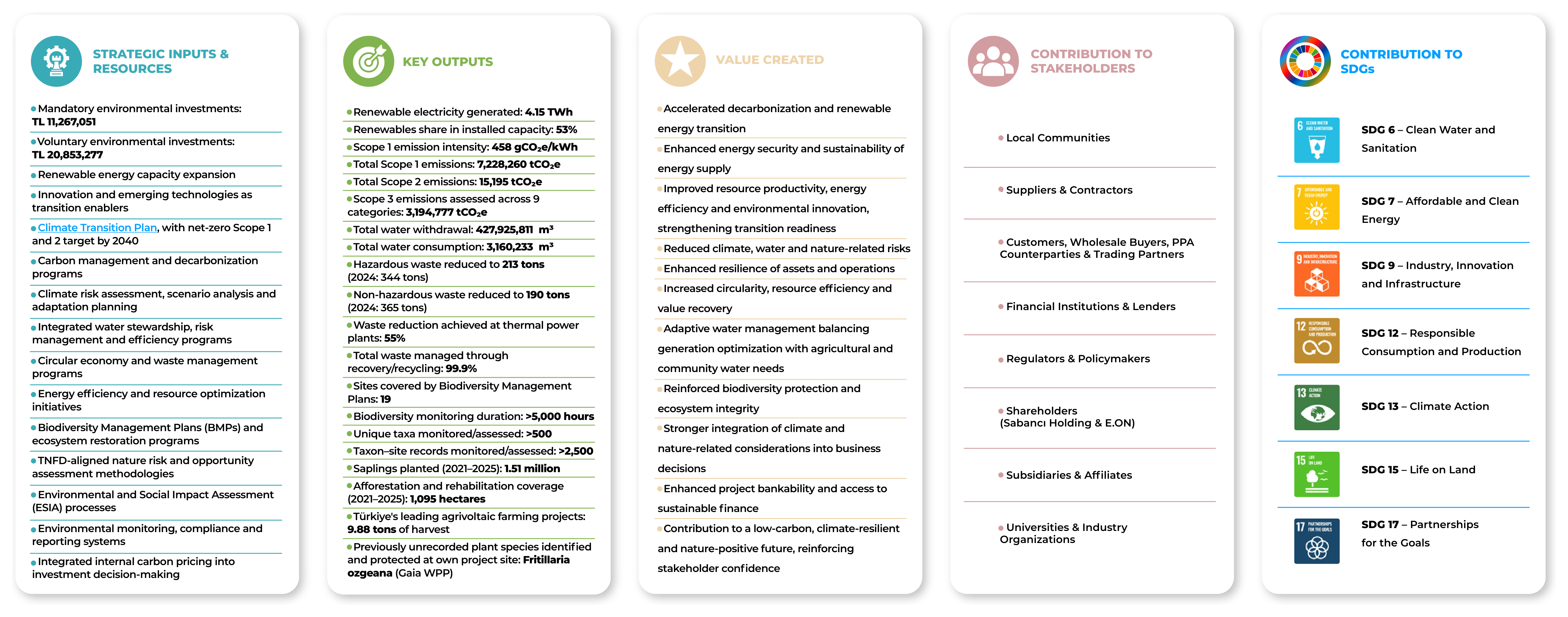
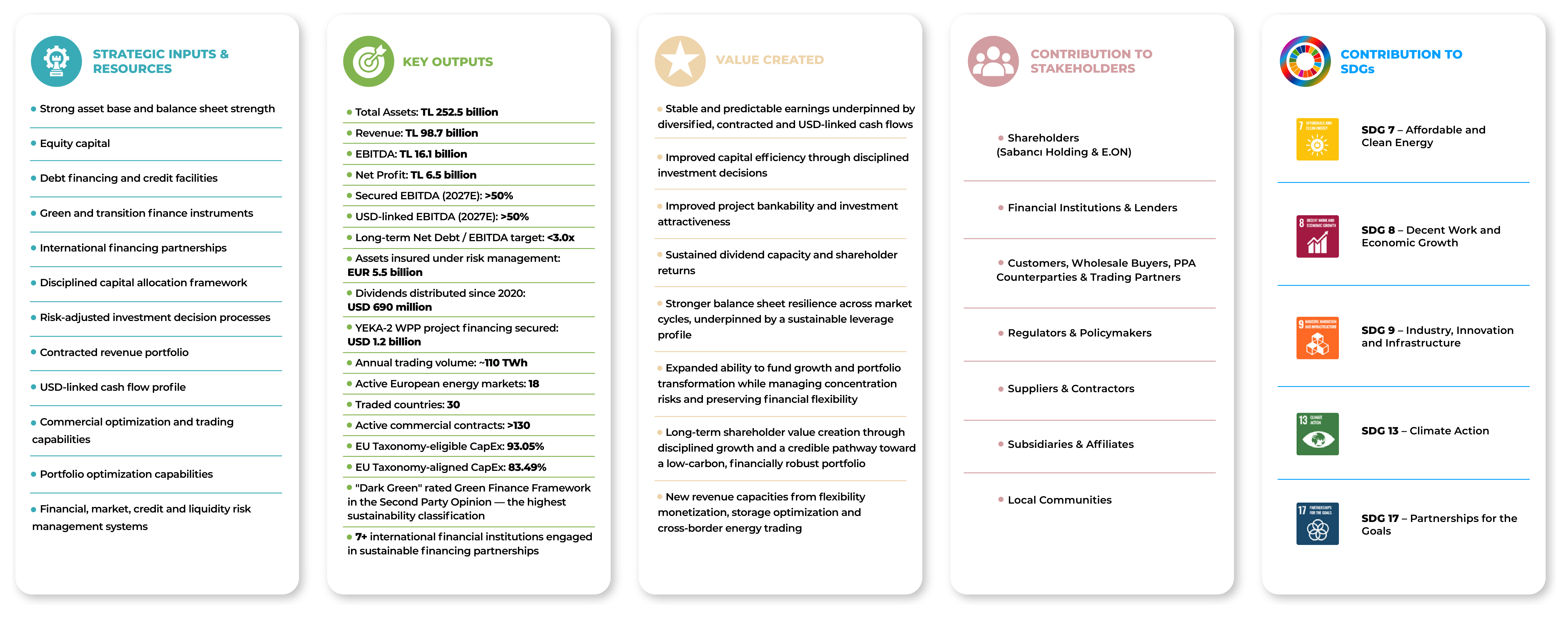
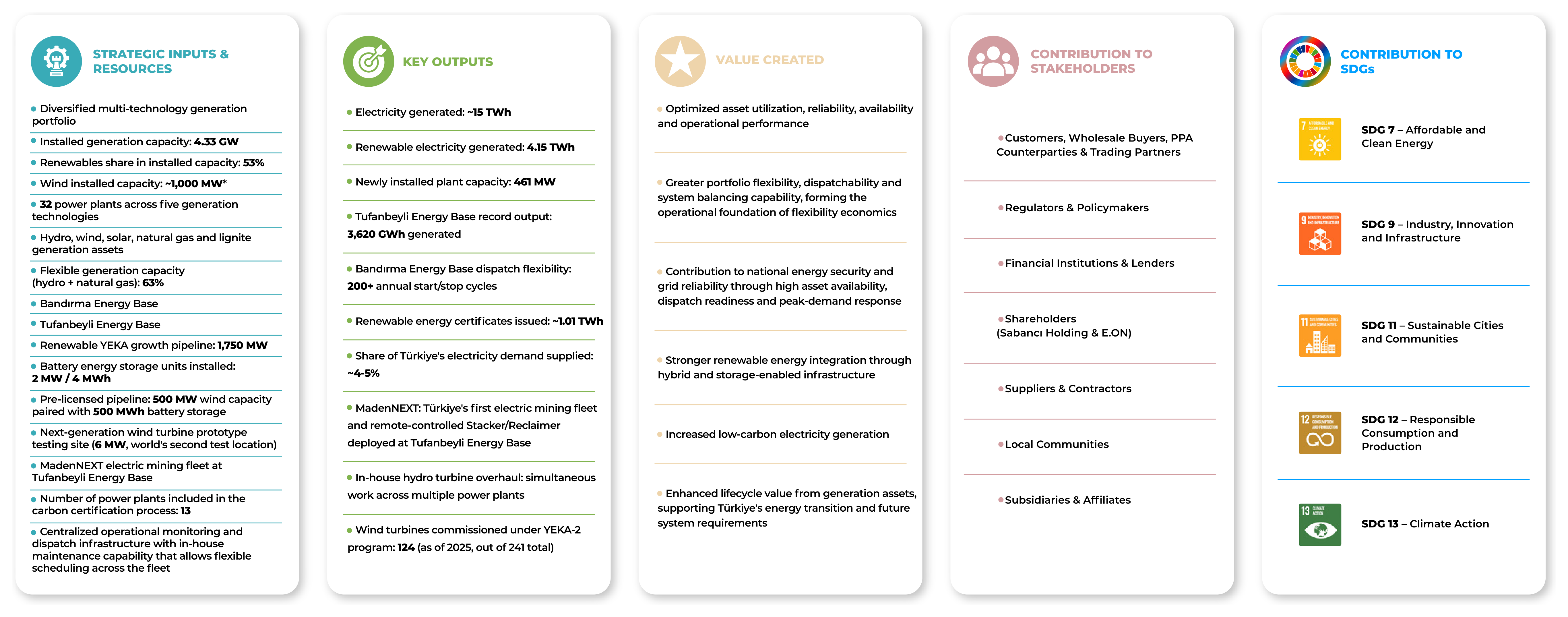
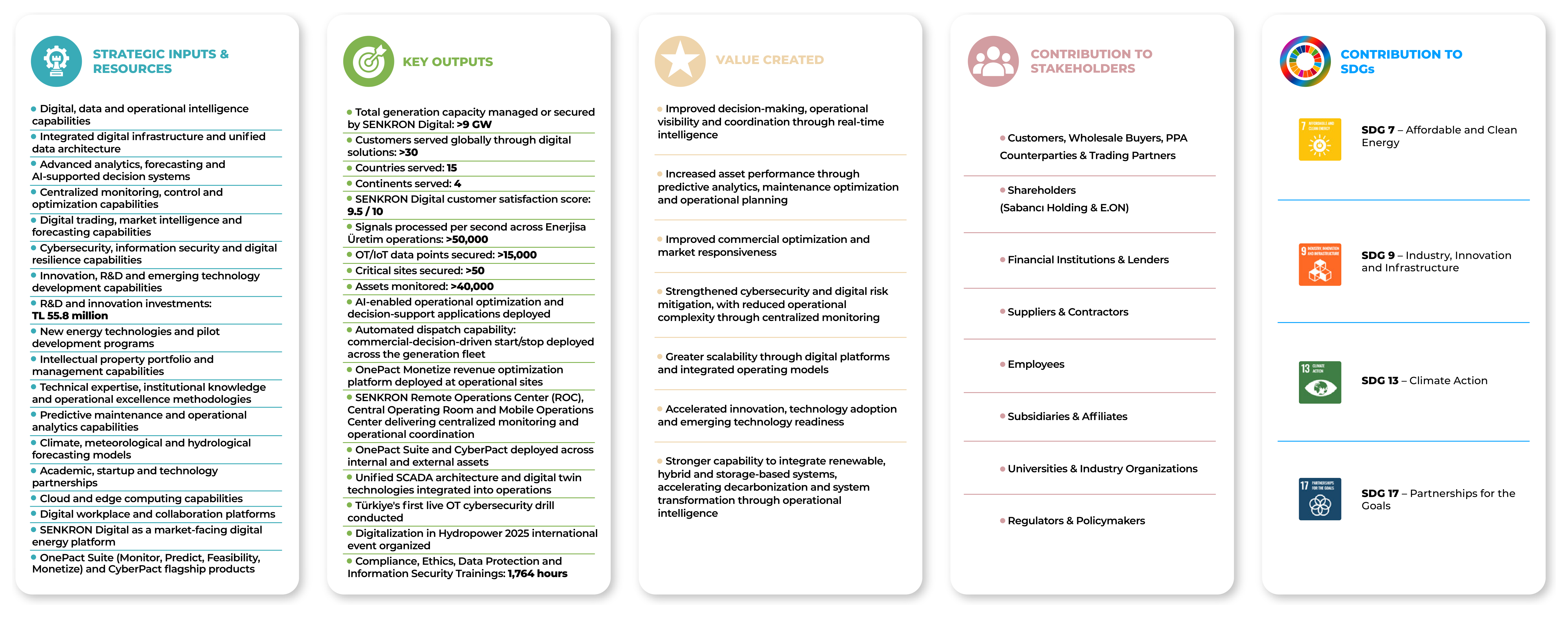
The assessment combines impact materiality (inside-out) and financial materiality (outside-in) through a consistent ESRS-aligned methodology. Sustainability matters are classified as material where they exceed the defined threshold under either dimension or both. The 2025 assessment also introduced separate gross and net scores to distinguish inherent impacts from residual impacts after mitigation measures. The methodology was implemented through four steps outlined below:
Step 1 — Building the Sustainability Universe
As the first step, we developed a comprehensive universe of potential sustainability topics by reviewing global trends, regulatory developments, sector dynamics, stakeholder expectations and international reporting frameworks. In this process, we considered: ESRS Double Materiality Implementation Guidance IFRS S1 and IFRS S2 Sustainability Disclosure Standards SASB Standards relevant to the electricity generation sector World Economic Forum Global Risks Report TCFD (Task Force on Climate-related Financial Disclosures) TNFD (Taskforce on Nature-related Financial Disclosures), including the LEAP approach Science Based Targets Network (SBTN) guidance
The assessment also incorporated the outcomes of previous materiality assessments, stakeholder feedback collected throughout the year, community engagement activities, investor and lender expectations, sector developments and emerging sustainability trends. The 2025 update also considered changes since the previous assessment cycle, including regulatory developments, evolving stakeholder expectations, sector transition dynamics and updates in business priorities.
Step 2 — Identification of Impacts, Risks and Opportunities
The identified sustainability matters were subsequently mapped against relevant ESRS topical standards and disclosure requirements to ensure alignment with European sustainability reporting expectations.
The assessment was conducted at the level of impacts, risks and opportunities, rather than solely at topic level. Identified sustainability matters were broken down into specific actual and potential impacts, risks and opportunities, which were individually assessed and scored. The materiality conclusion at topic level was then determined based on the aggregation of the underlying IRO assessment results.
Step 3 — Stakeholder Engagement
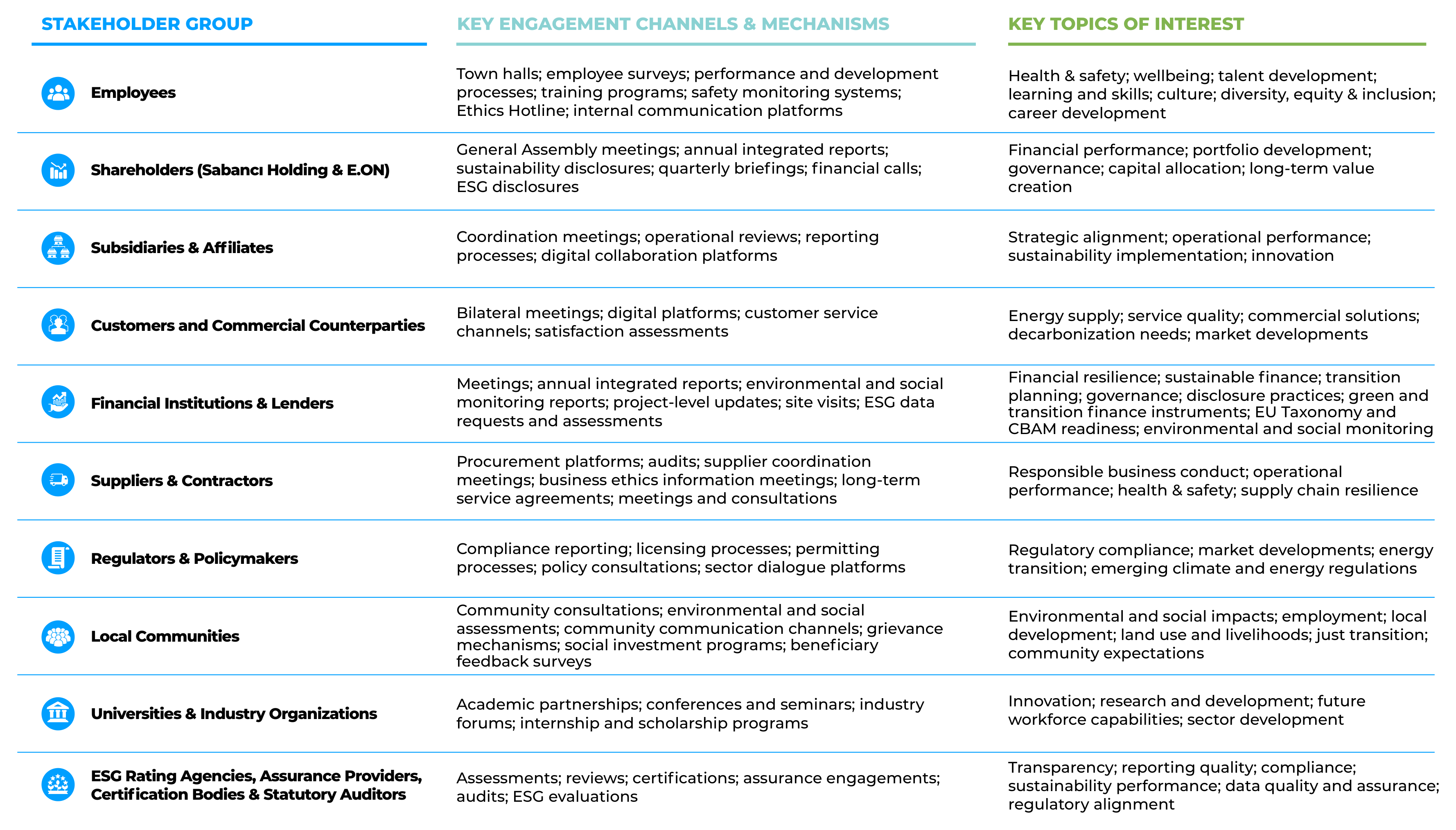
Stakeholder engagement formed a key input to our assessment process. Perspectives were gathered from a broad range of internal and external stakeholders, including affected stakeholders and users of integrated reporting. These included employees, senior management, shareholders, subsidiaries, financial institutions, customers, suppliers, local communities and academic representatives.
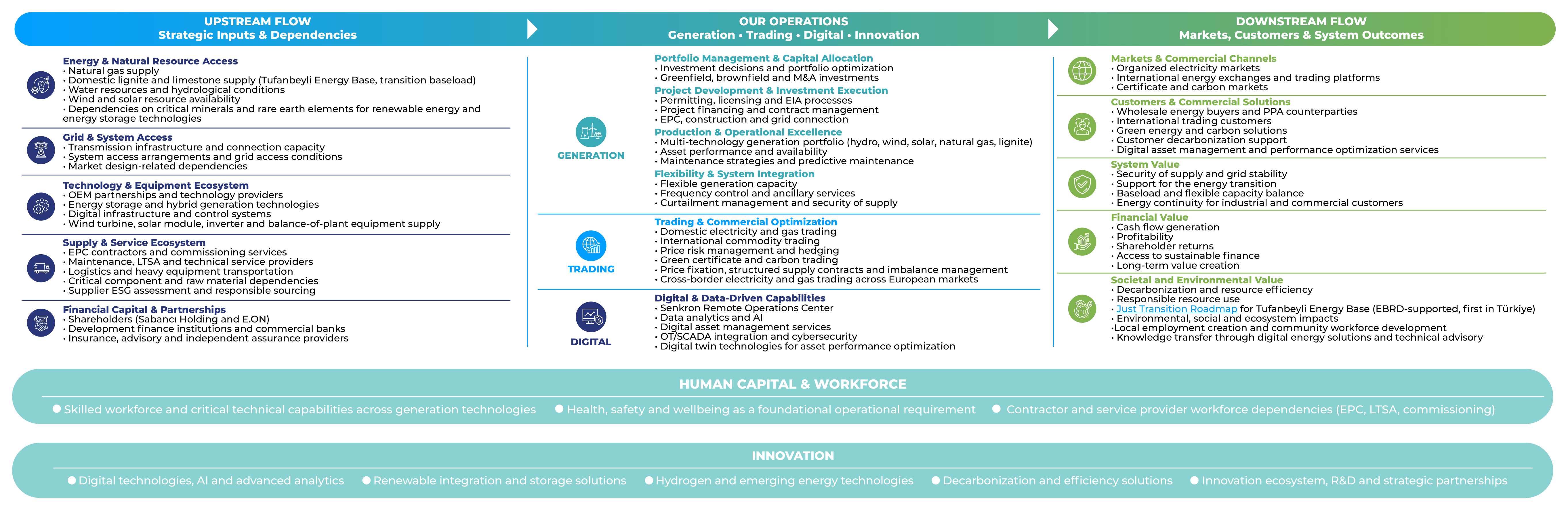
Stakeholder feedback was collected through surveys and ongoing engagement mechanisms and subsequently integrated into the assessment using a predefined scoring methodology. These perspectives were complemented by internal assessments, regulatory developments, sector trends and business priorities. Building on these inputs, we assessed sustainability-related impacts, risks and opportunities across our full value chain, covering upstream activities, our own operations and downstream activities.
Step 4 — Assessment and Scoring
A cross-functional assessment workshop involving approximately 65 participants from 35 departments was conducted to evaluate identified environmental, social and governance-related impacts, risks and opportunities. Subject matter experts reviewed, challenged and refined the assessment outcomes to ensure completeness, consistency and alignment across business functions. Assessment outcomes were subsequently calibrated and reviewed through expert discussions and senior management validation.
Impact materiality was assessed in line with ESRS methodology. Actual and potential positive and negative impacts were evaluated based on their scale, scope and irreversibility, while likelihood was additionally considered for potential impacts. Financial materiality was assessed by evaluating the current and potential effects of sustainability-related risks and opportunities on our revenues, profitability, cash flows, access to finance, cost of capital, assets and liabilities, and business continuity. Risks and opportunities were assessed based on their magnitude and likelihood, taking into account existing mitigation measures and management practices.
For both impact and financial materiality, predefined scoring scales and decision thresholds were applied to support consistency across the assessment. Topics were classified as material where one or more underlying IROs exceeded the defined impact and/or financial materiality threshold. Borderline cases were subject to additional expert review, calibration and management validation to ensure completeness, consistency and methodological robustness.
The assessment considered short-term (0–5 years), medium-term (5–10 years) and long-term (10–30 years) time horizons to evaluate how sustainability-related matters may influence both our impacts and financial performance over time. These time horizons reflect the characteristics of the energy generation sector, including asset life cycles, investment planning horizons, regulatory developments and long-term transition dynamics.*